Disclosure: I’m not a financial advisor, and this isn’t financial advice. I own VOO, QQQM, VUG and FTEC.
Here’s how to start investing with little money: open a brokerage account, buy a broad-market ETF by the dollar, and keep adding a little every week. You don’t need thousands. Fractional shares let you buy part of a share, so $200, or even $25, is enough to start.
That’s how I started. On January 16, 2022, when I was 19, I put $200 into VOO, an S&P 500 ETF, and got 0.47310 of a share. It’s up about 69% since, and I’ve kept buying almost every week.
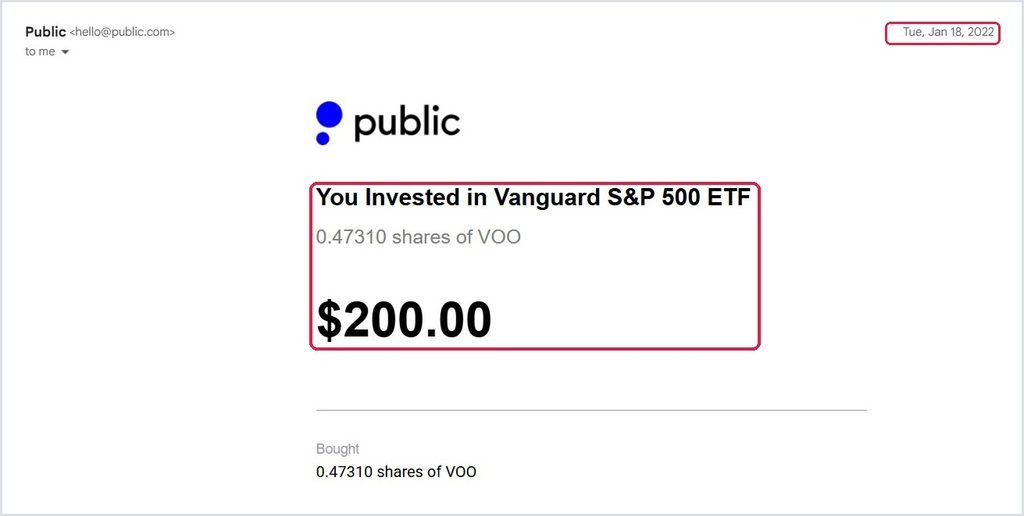
Table of Contents
How Much Money Do You Need to Start Investing?
Less than you think. Many brokerages let you buy by dollar amount instead of by the share. If VOO costs $500 a share and you invest $200, you own 0.4 of a share, and every dollar grows the same as it would in a full share.
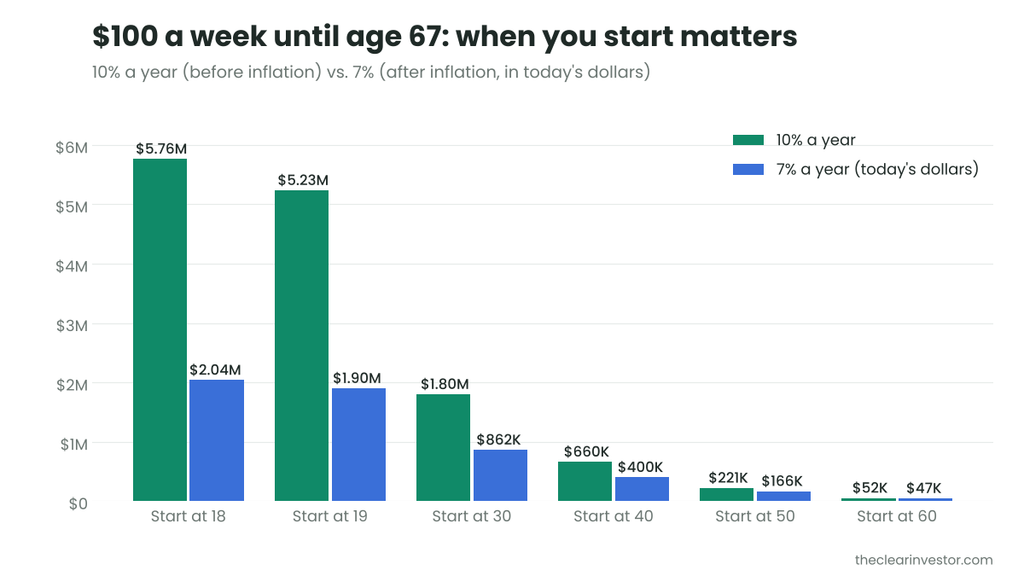
The amount matters less than starting early and adding to it. In my compound interest guide, $100 a week starting at 18 can grow to about $5.76 million by 67, with only $254,800 of your own money put in.
Step 1: Open a Checking Account and Debit Card
Your investing money has to start somewhere, and a brokerage account pulls it from your bank. I opened my first checking account at Wells Fargo at 19 with $25, and I got my first debit card in November 2021. Here’s how to get your first debit card.
If you can, pick a debit card that pays you cash back. Mine pays 5% on gas, and that money can go toward investing too. Here’s how I save money with cash back.
Step 2: Keep an Emergency Fund in a High-Yield Savings Account
Before you invest, have somewhere safe for money you might need soon. My first savings account at Wells Fargo paid 0.01% and earned me nothing, so I barely used it. Today my emergency fund sits in a high-yield savings account that pays 3.5% APY.

To be honest, I did this in the opposite order. I wanted every dollar invested, so I didn’t open my high-yield account until June 2025. Once my investments were big enough, a separate emergency fund just made sense. Here’s why I barely used my first savings account.
Step 3: Open a Brokerage Account
A brokerage account is where you buy investments. Opening one takes about 15 minutes. You need your Social Security number, an ID, some basic employment info and a bank account to fund it.
My first was Public in 2021. My second was Vanguard in 2022, and it’s still my main account. I closed Public after it charged me an inactivity fee I didn’t know about and sold my free stock to pay it. So before you sign up anywhere, check the fee schedule for fees for doing nothing. At Vanguard, the $25 yearly account fee is waived if you choose e-delivery.
Here’s how to open your first brokerage account, step by step.
Step 4: Buy Your First ETF
An ETF is a fund that holds many stocks at once. VOO holds the 500 companies in the S&P 500, and its fee is 0.03% a year. That’s why my first purchase was an ETF instead of a single company.
A single stock can drop fast even when nothing is wrong with the business. NYT stock fell about 7% in one day in September 2026 without a bad earnings report. With an S&P 500 ETF, one company’s bad day barely moves your money.
To buy it, fund your account, search for the ticker, choose a dollar amount and place the order. Here’s how to buy your first stock and what an ETF is.
Step 5: Keep Buying Every Week
After my first $200, I kept buying VOO on a schedule. Buying the same way every week or month, no matter the price, is called dollar-cost averaging. Some weeks you buy high, some weeks you buy low, and you never have to guess.
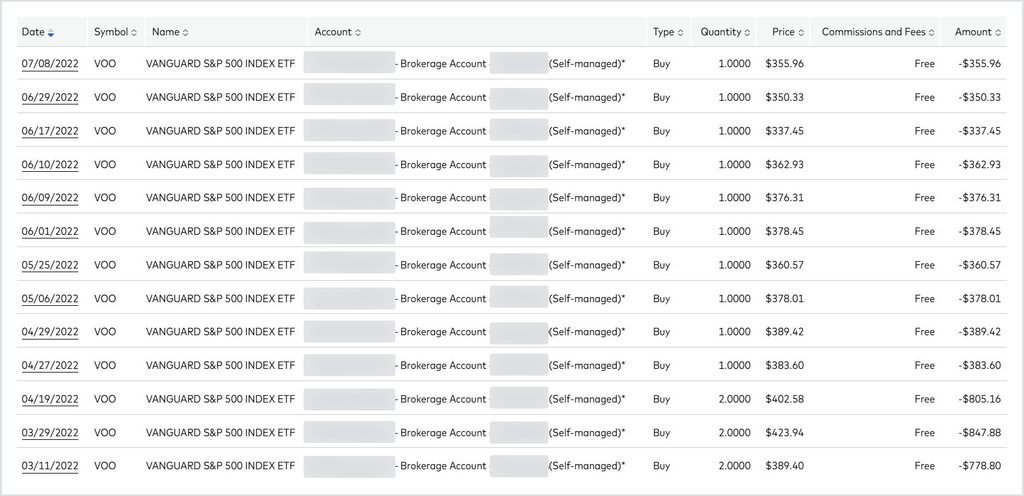
2022 tested that. VOO fell from $423.94 to $337.45 a share in my purchase history, and I kept buying. By 2025, I’d settled into about $500 a week. Start with whatever you can, even $25 a week, and raise it as your income grows.
Step 6: Reinvest Your Dividends and Let Compounding Work
Many ETFs pay dividends every quarter. Mine started tiny: my first dividend from QQQM was $0.58, and my first from VUG was $0.30. Today my VOO dividend alone is in the triple digits every quarter, and it’s reinvested automatically, so each one buys a little more.

That’s compound interest at work: your money earns money, and then that money earns money too. The earlier you start, the more years it has to grow.
See what your own money could grow to with my compound interest calculator, or compare keeping it in savings with my saving vs investing calculator.
Where to Find Money to Invest
If your paycheck doesn’t leave anything to invest, that’s where the rest of this site comes in:
- Earn more: how I make money online, with $11,900+ from 9 platforms.
- Set aside for taxes first: side income has no tax taken out, so read my side hustle tax guide before you invest it.
- Keep more of what you spend: how I save money with cash back.
My Verdict: Can You Start Investing With Little Money?
Yes. I started with $200 at 19, and the habit mattered more than the amount. Open a brokerage account with no fees for doing nothing, buy a broad-market ETF by the dollar and keep adding every week. Start early, keep adding, and let time do the heavy lifting.
FAQ
Can you start investing with $100?
Yes. With fractional shares, you can buy part of a share of an ETF like VOO for $100 or less. My first deposit to Vanguard was $100.
What should I invest in first?
I started with VOO, an S&P 500 ETF. It holds 500 companies, its fee is 0.03% a year, and one company’s bad day barely moves it.
How much should I invest each week?
Whatever you can keep doing. Even $25 a week adds up over time. I started with $200 and raised my weekly buys as my income grew, to about $500 a week by 2025.
Should I build an emergency fund before investing?
It’s safer to. Keep money you might need soon in a high-yield savings account, and invest money you won’t need for years. I did it the other way around and opened my high-yield account later.
Which brokerage do you use?
Vanguard has been my main account since January 2022, and I use Robinhood too. My first was Public in 2021, which I closed after it charged me an inactivity fee.
I’m not a licensed financial advisor, and this isn’t financial advice. Investing involves risk, including losing money, and past returns don’t guarantee future results. This guide is based on my own accounts. It isn’t sponsored by Vanguard, Public or any company mentioned.