Opening your first brokerage account takes about 15 minutes. You need your Social Security number, an ID, some basic employment info and a bank account to fund it. My first two were Public in 2021 and Vanguard in 2022.. Vanguard is still my main account. I closed Public after it charged me an inactivity fee I didn’t know about and sold my free stock to pay it.
Here’s how I opened both, step by step, and what I’d tell you to watch out for.
Table of Contents
What Is a Brokerage Account?
A brokerage account is an account you use to buy and sell investments like stocks, ETFs and index funds. Think of it as a bank account for investing. You move money in from your bank, then use it to buy investments.
The most common type is a regular individual brokerage account (also called a taxable account). That’s what I opened at both Public and Vanguard. There are also retirement accounts like a Roth IRA, which have different tax rules, but this post is about a regular brokerage account.
You need to be 18 or older to open one in your own name. I opened my first one at 19.
My First Brokerage Account: Public (2021)
I signed up for Public on November 25, 2021.
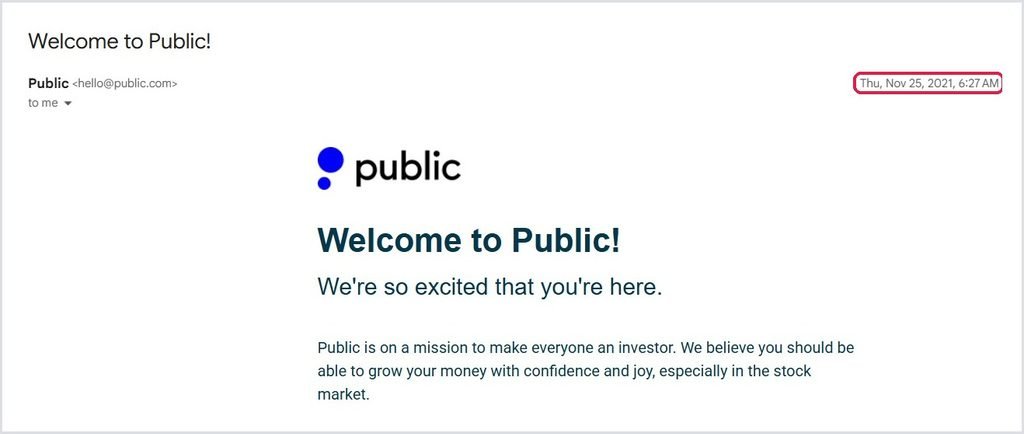
Honestly, I signed up for the $5 referral bonus. As a 19-year-old in 2021, even $5 felt good. Public also had a social feed where you could see what other people were investing in, which was new back then and made investing feel less intimidating.
My account wasn’t approved until January 16, 2022, almost two months later.
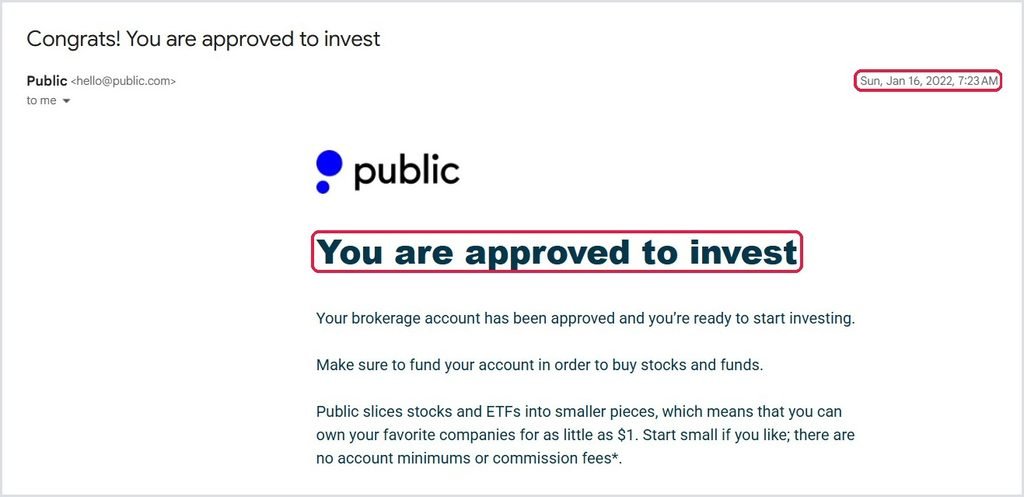
Two days later, my bonus showed up: $5 worth of Amazon stock.
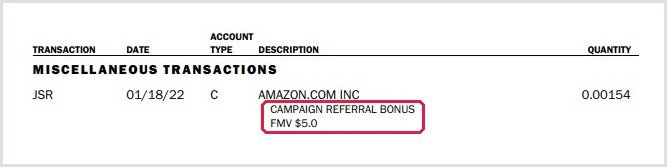
That was my first bonus ever, and it felt nice.
Why Vanguard Became My Main Account
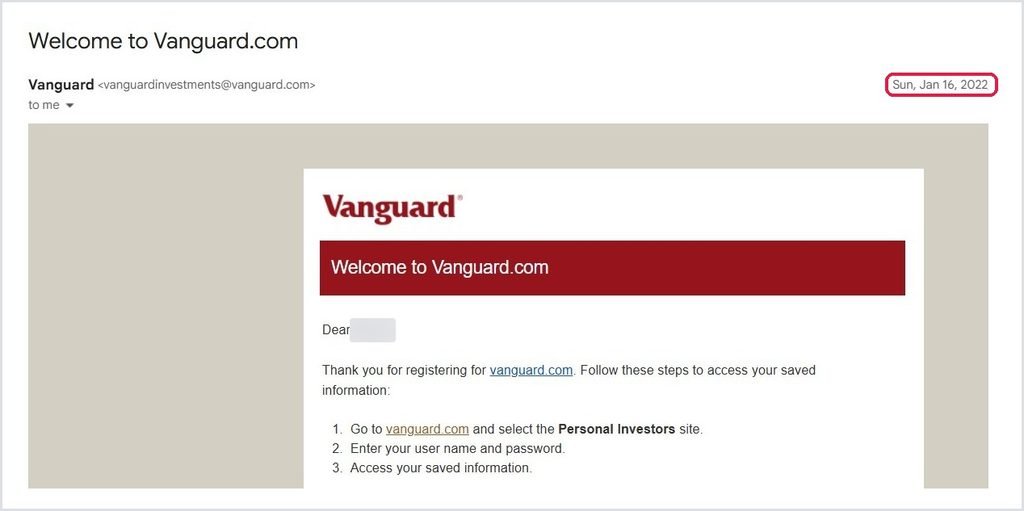
By the time Public approved me, I’d already decided Vanguard would be my main account. I opened it in January, 2022.
I picked Vanguard for two reasons:
- Reputation. Vanguard is one of the biggest and most trusted names in investing.
- VOO. I wanted to buy VOO (Vanguard’s S&P 500 ETF) on Vanguard’s own platform.
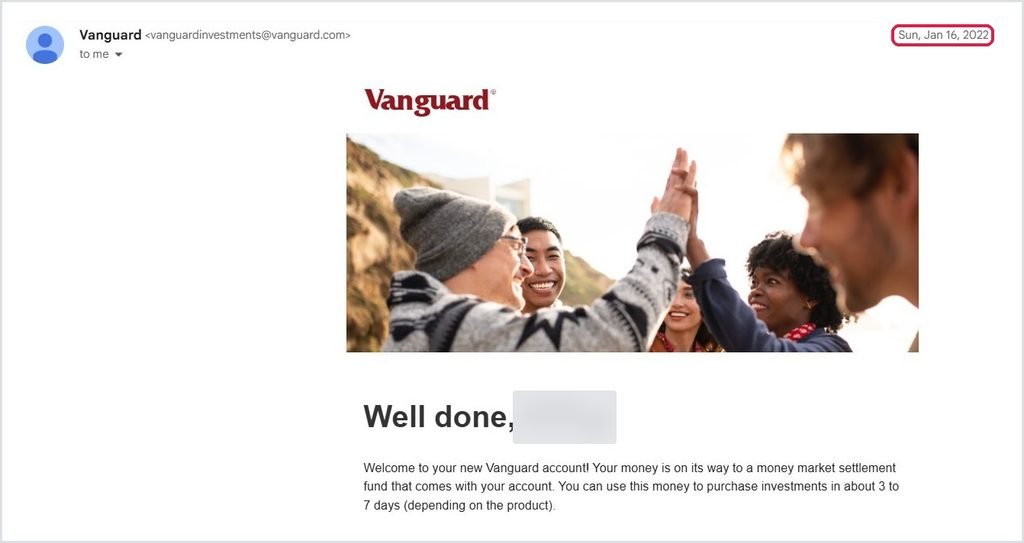
The account was opened quickly, and Vanguard emailed me on Jan 16, 2022 to confirm it:
How to Open a Brokerage Account, Step by Step
Here’s the process I went through at Vanguard. It’s similar at most brokers.
Step 1: Pick your broker
Look for:
- A trusted name. Your money and investments should be with an established company.
- The investments you want. I wanted VOO, so Vanguard made sense.
- Low fees, including fees for doing nothing. Check the fee schedule before you sign up. More on this below, because it’s the mistake that cost me.
Step 2: Have your info ready
Vanguard asked for:
- Social Security number
- ID
- Employment info (whether you’re employed, and your employer)
- Your bank account, to fund the account
It was quick. My account was open the same day.
Step 3: Choose your account type
For your first account, a regular individual brokerage account is the simplest. You can add a retirement account like a Roth IRA later. I only opened an individual brokerage account.
Step 4: Link your bank and make your first deposit
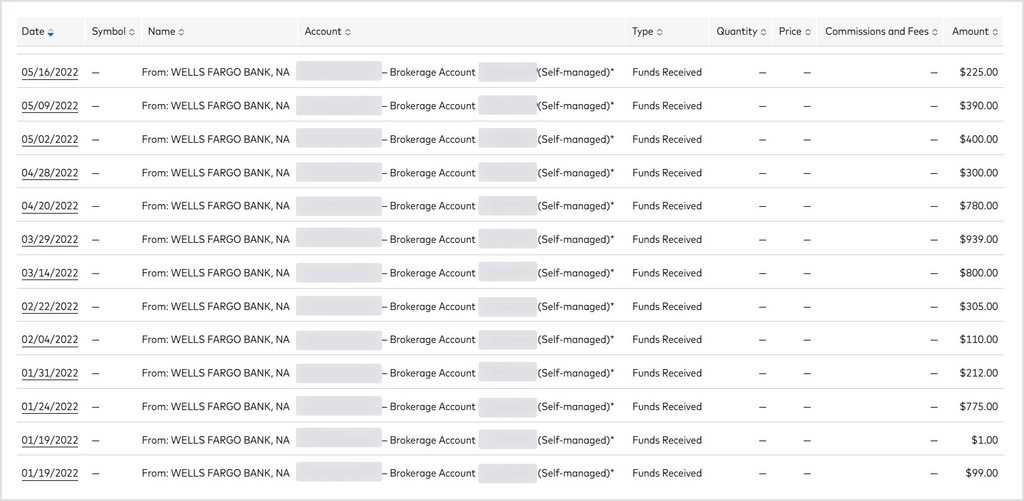
I linked my Wells Fargo checking account. My first deposit was $100, which went through as $1 and $99 on January 19, 2022. I think the $1 was a test transfer.

At Vanguard, your money first goes into a money market settlement fund that comes with your account. You use that cash to buy investments. Vanguard said it could take about 3 to 7 days before the money was ready to invest.
Step 5: Turn on e-delivery
Vanguard charges a $25 annual account service fee on brokerage accounts, but it’s waived if you choose e-delivery of your statements and documents. Turn it on when you set up your account. It’s free, and it avoids a fee you don’t need to pay.
Vanguard also offers Cash Plus, which is where I keep my emergency fund. Here’s how it works.
Step 6: Buy your first investment
Once your cash settles, you can buy. I mainly bought VOO. I cover how I invest in VOO in this post and why I invest in VOO in this post.
After that first $100, I kept adding money. Between January and May 2022, I deposited $5,336 into Vanguard:
The Fee That Drained My First Account
Back on Public, I’d bought a couple hundred dollars of VOO. Once Vanguard was set up, I moved everything over. On December 8, 2022, I withdrew the last $225 from Public.

I left one thing behind on purpose: my $5 Amazon bonus stock. I wanted to run a little experiment and see how much that free $5 would grow to in 10 or 20 years.
I never got to find out.
In August 2024, Public charged me a $3.99 inactivity fee:
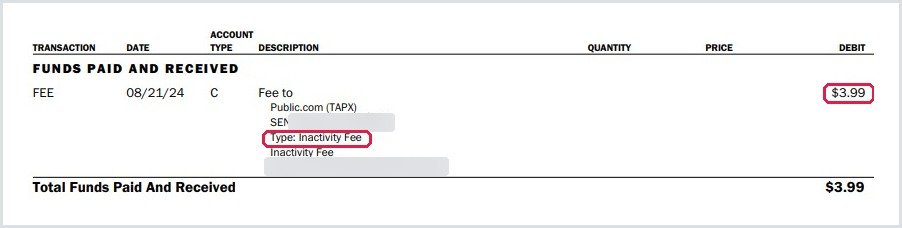
I didn’t have cash in the account to pay it, so five days later Public sold my Amazon stock without asking me. The statement even calls it “unsolicited.”

By then, Amazon had done a 20-for-1 stock split, so my bonus was 0.0308 shares worth about $5.42. The experiment was actually working. Public sold 0.02274 shares for $3.98 to cover the fee.
I didn’t get any warning I noticed. I found out when I logged in and saw my stock had been sold. I didn’t even know Public had an inactivity fee.
That was it for me. In November 2024, I took out the last $1.87 and closed the account.

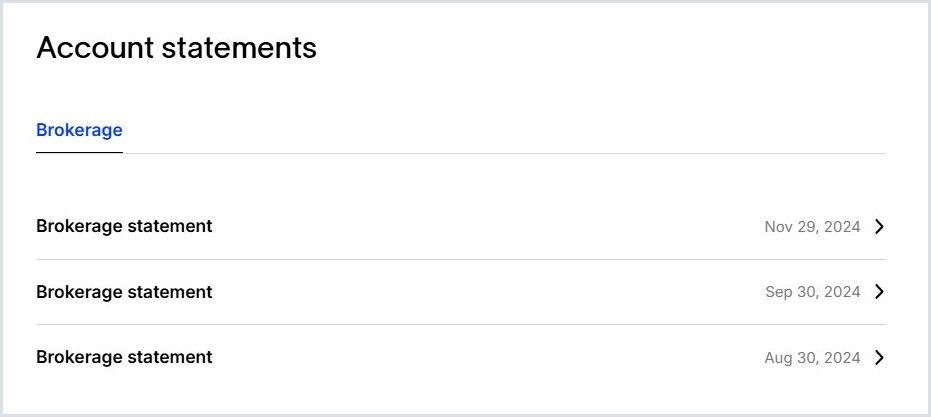
My $5 experiment turned into $1.87.
How to Avoid Inactivity Fees
It was only a few dollars, but if you leave a small balance sitting in an account you don’t use, fees can eat it. Here’s how to avoid that:
- Read the fee schedule before you sign up. Look for inactivity fees, account service fees and transfer fees.
- Don’t leave small balances in accounts you’ve stopped using. Either keep using the account, or move everything out and close it.
- Log in once in a while. If I’d checked my Public account more often, I’d have seen the fee coming.
- Turn on e-delivery and read the emails. Fee notices often come by email or in statements.
- Close accounts you don’t need. Fewer accounts means fewer surprise fees.
Do I Regret Opening Public?
No. Back then, mixing investing with a social feed was new, and it got me started. It was also my first sign-up bonus, which felt nice. It was an experiment, and I learned something from it.
Today I don’t miss Public’s social side, because Robinhood has social features now. I also have Robinhood and Fidelity accounts, which I’ll cover in future posts.
My Advice If You’re Opening Your First Brokerage Account
If I were 19 again, I’d do the same thing: open a Vanguard brokerage account and invest regularly in an ETF like VOO. Keep it simple, pick a broker you trust, turn on e-delivery, and don’t leave money sitting forgotten in an account you’ve stopped using. To see how much investing could grow your money compared to saving, try my saving vs investing calculator.
Ready to buy your first stock? Here’s how.
Not sure what to buy first? Here’s what an ETF is and why I buy VOO.
Already have your bank account and debit card sorted? If not, start with how to get your first debit card. If you’re building credit too, see how to get your first credit card with no credit history.
FAQ
How old do you have to be to open a brokerage account?
You need to be 18 to open an account in your own name. I opened my first one at 19.
What do you need to open a brokerage account?
Your Social Security number, an ID, basic employment info and a bank account to fund it.
How long does it take to open a brokerage account?
My Vanguard account was open the same week. My Public account took almost two months to get approved.
How much money do you need to start investing?
You can start small. My first Vanguard deposit was $100.
Do brokerage accounts charge inactivity fees?
Some do. Public charged me a $3.99 inactivity fee in 2024 and sold my stock to pay it. Always check a broker’s fee schedule before you leave money sitting in an account.
Does Vanguard charge account fees?
Vanguard charges a $25 annual account service fee on brokerage accounts, but it’s waived if you sign up for e-delivery.
This post is based on my own experience and is not financial advice. Fees and policies can change, so check each broker’s current fee schedule before opening an account.